
LUTIE
CAFE
LOS ANGELES, CALIFORNIA
Flexible Outdoor Furniture System
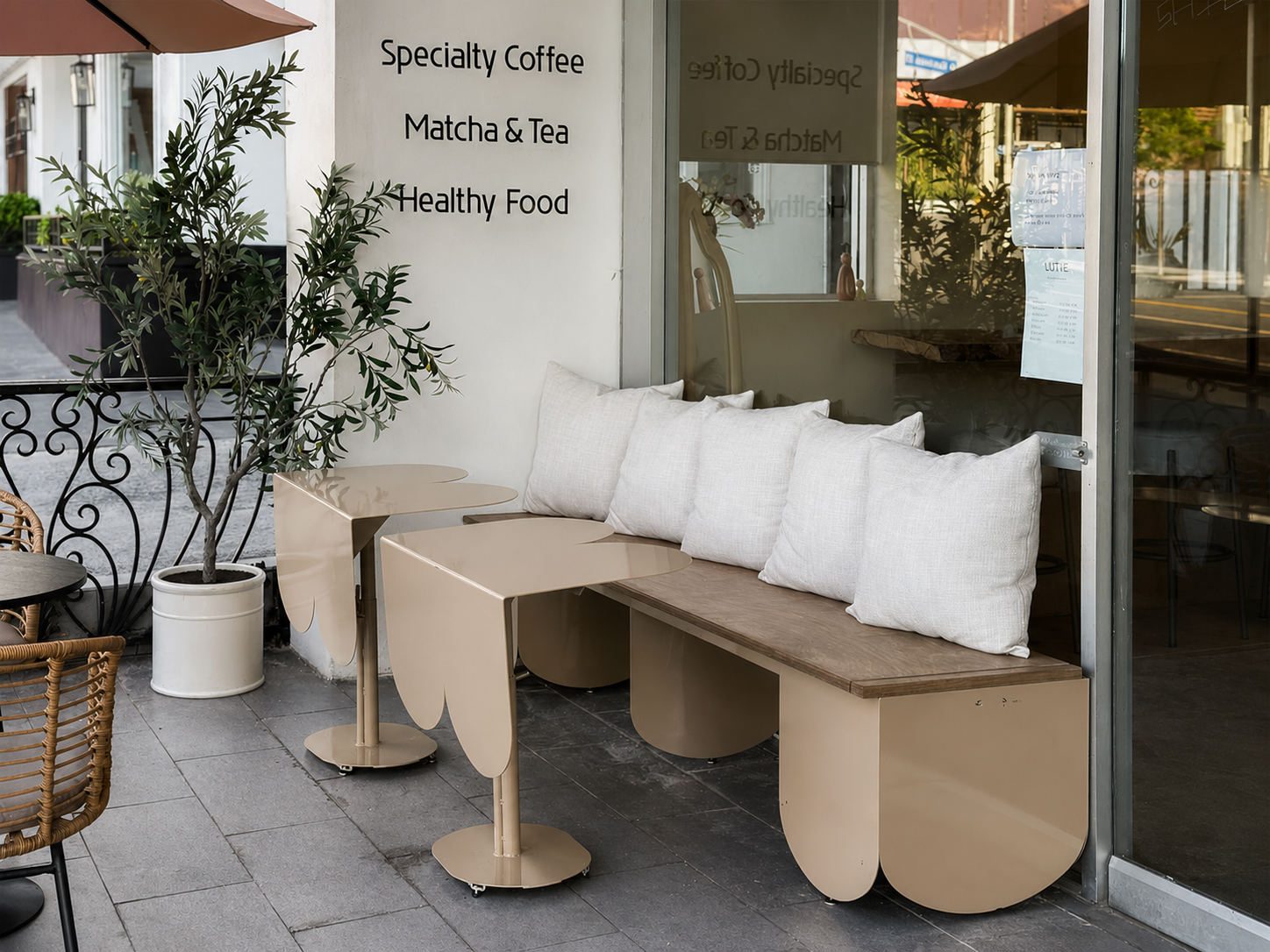
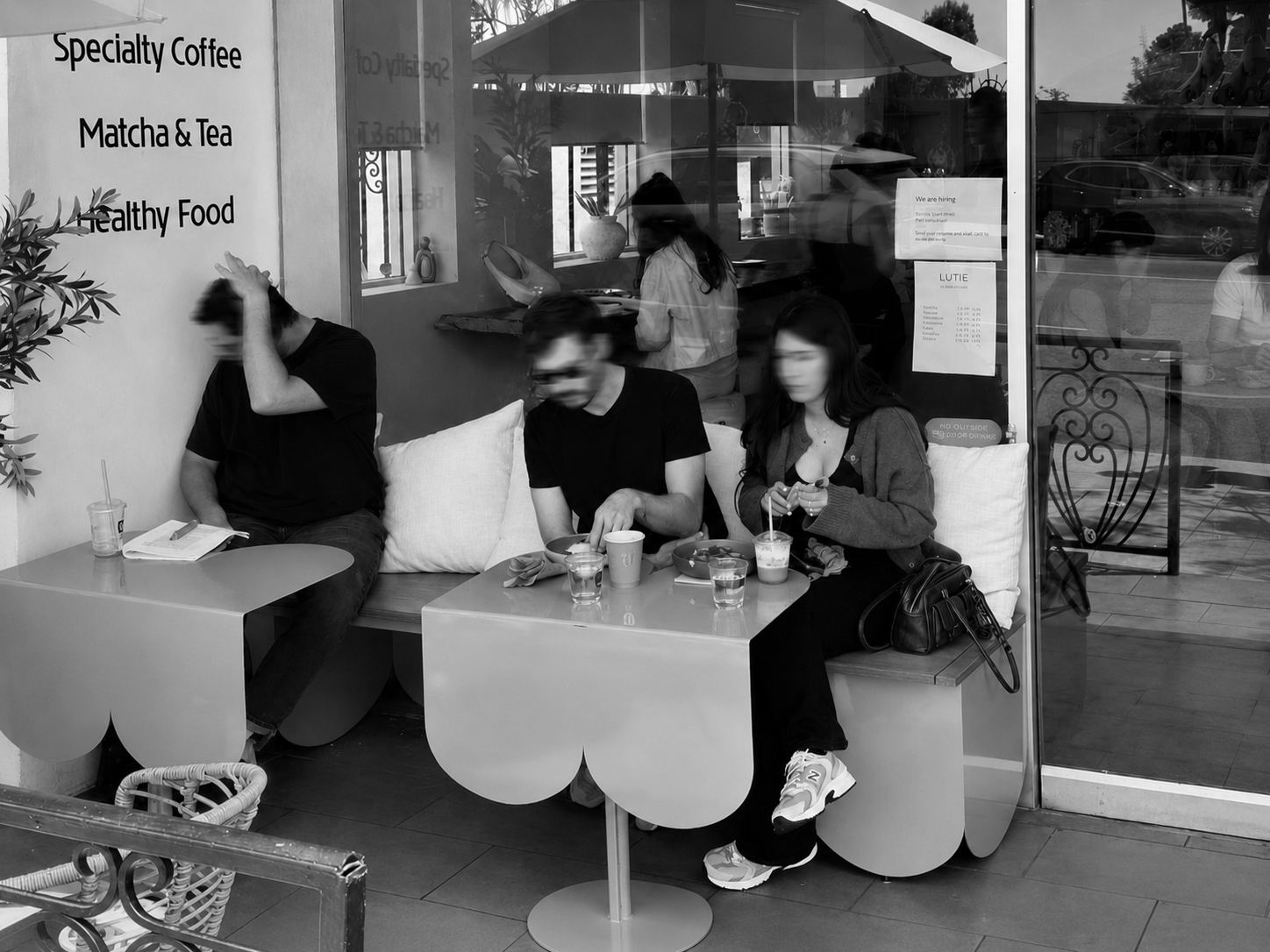
The outdoor space of Lutie Café is designed as an adaptable environment that responds to the changing needs of a café throughout the day. The project explores how furniture can become an architectural element by integrating seating, tables, storage, flexibility, and security into a single system.
Instead of relying on conventional outdoor furniture, the design introduces a custom-built modular system composed of benches, adjustable tables, chairs, and stools. Each element is developed to maximize usability while maintaining a clear and unified visual language.
Type: Interior Design - Product
Client: Reza Khoram
Architecture & Construction: QASTIC DESIGN-BUILD
Principals in charge: Mahdi A.Bakhshian, Mohammad Momen
Design Team: Romina Nikfarjam, Masoud Ansari
Visualization: Romina Nikfarjam, Sarah Mazraeh
Status: Built
Location: Sunset BLVD, Los Angeles, California
Design Concept
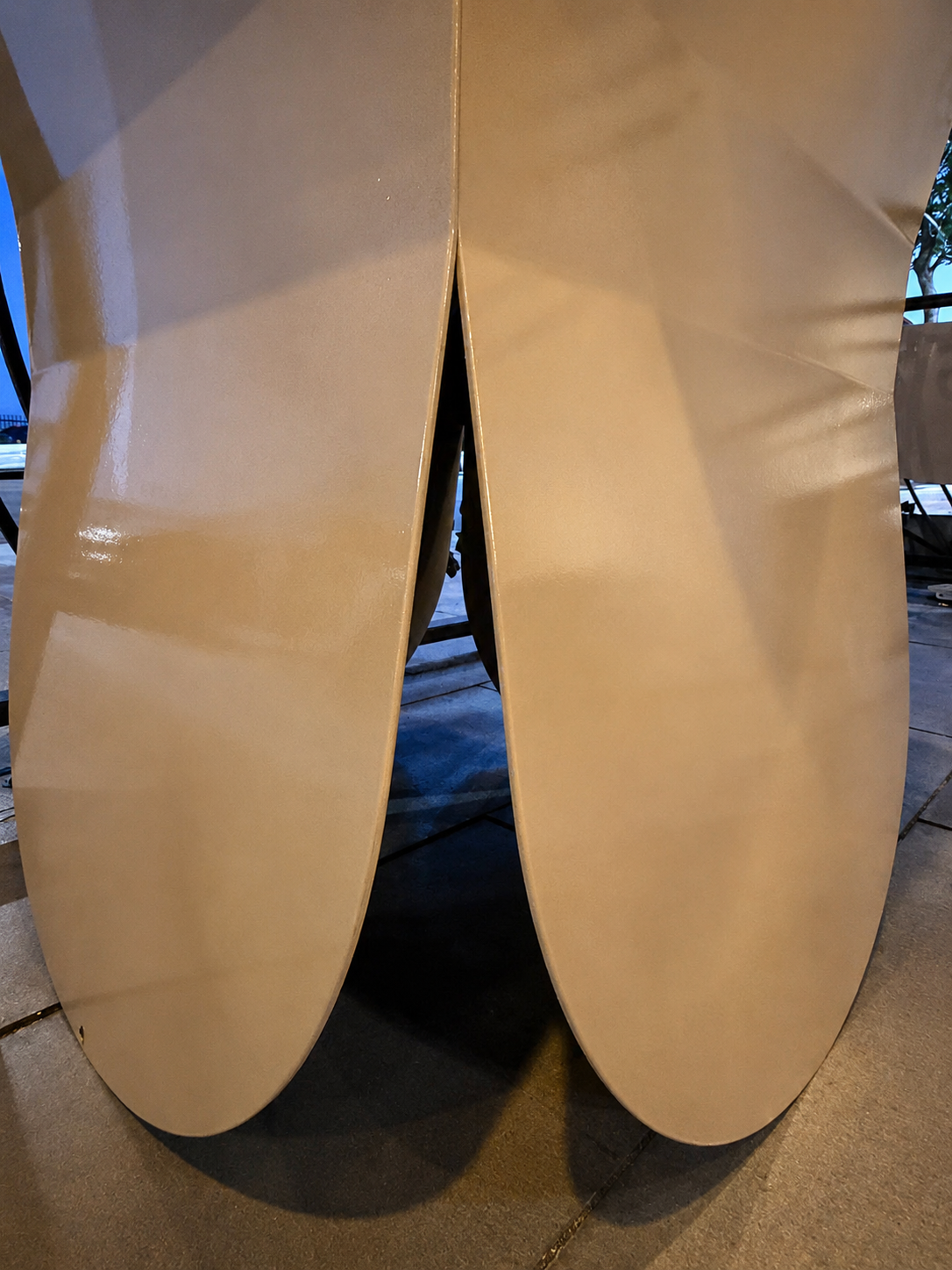
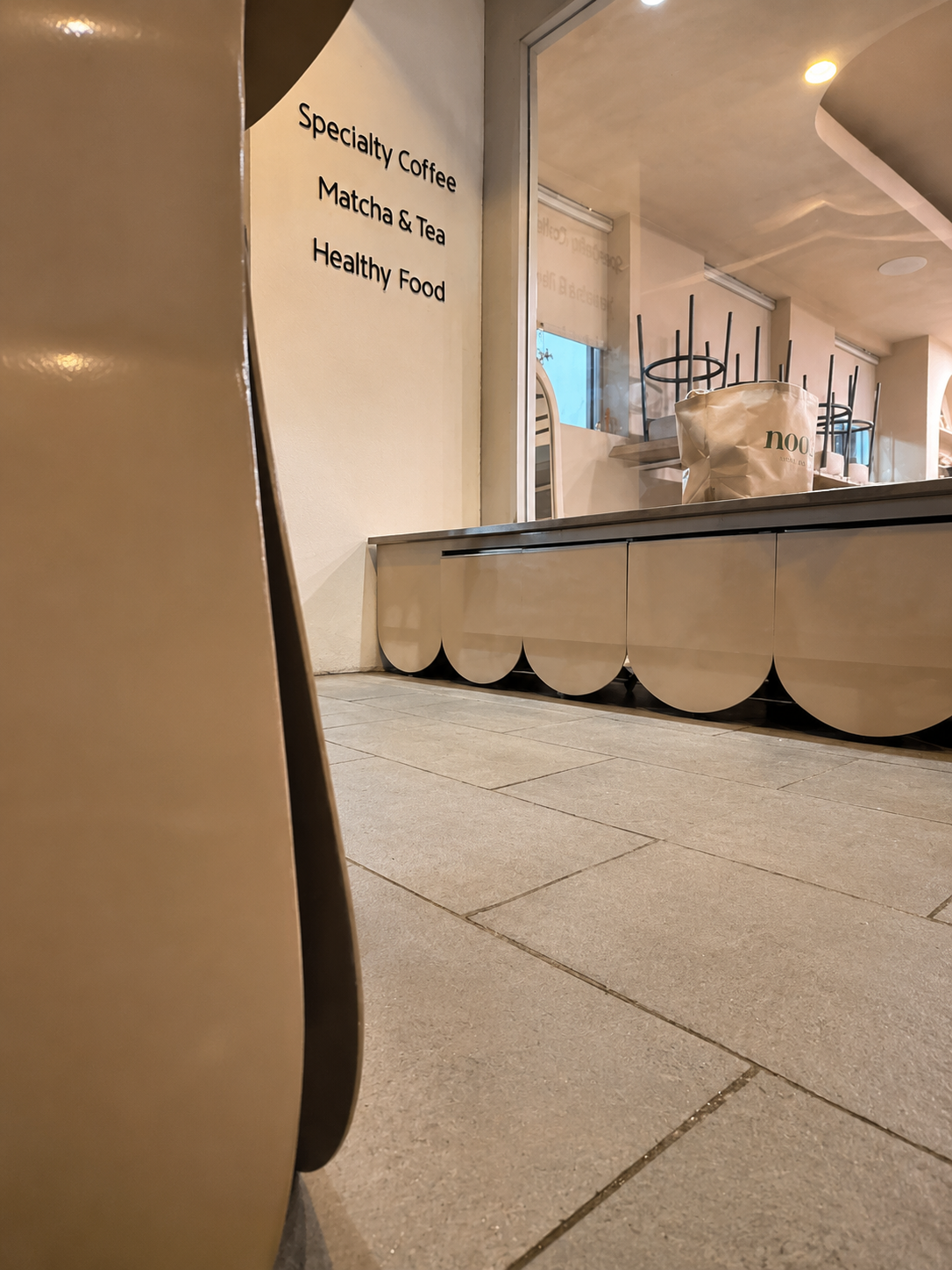
The design concept is based on three principles: practical comfort, minimalism, and U-shaped geometry.
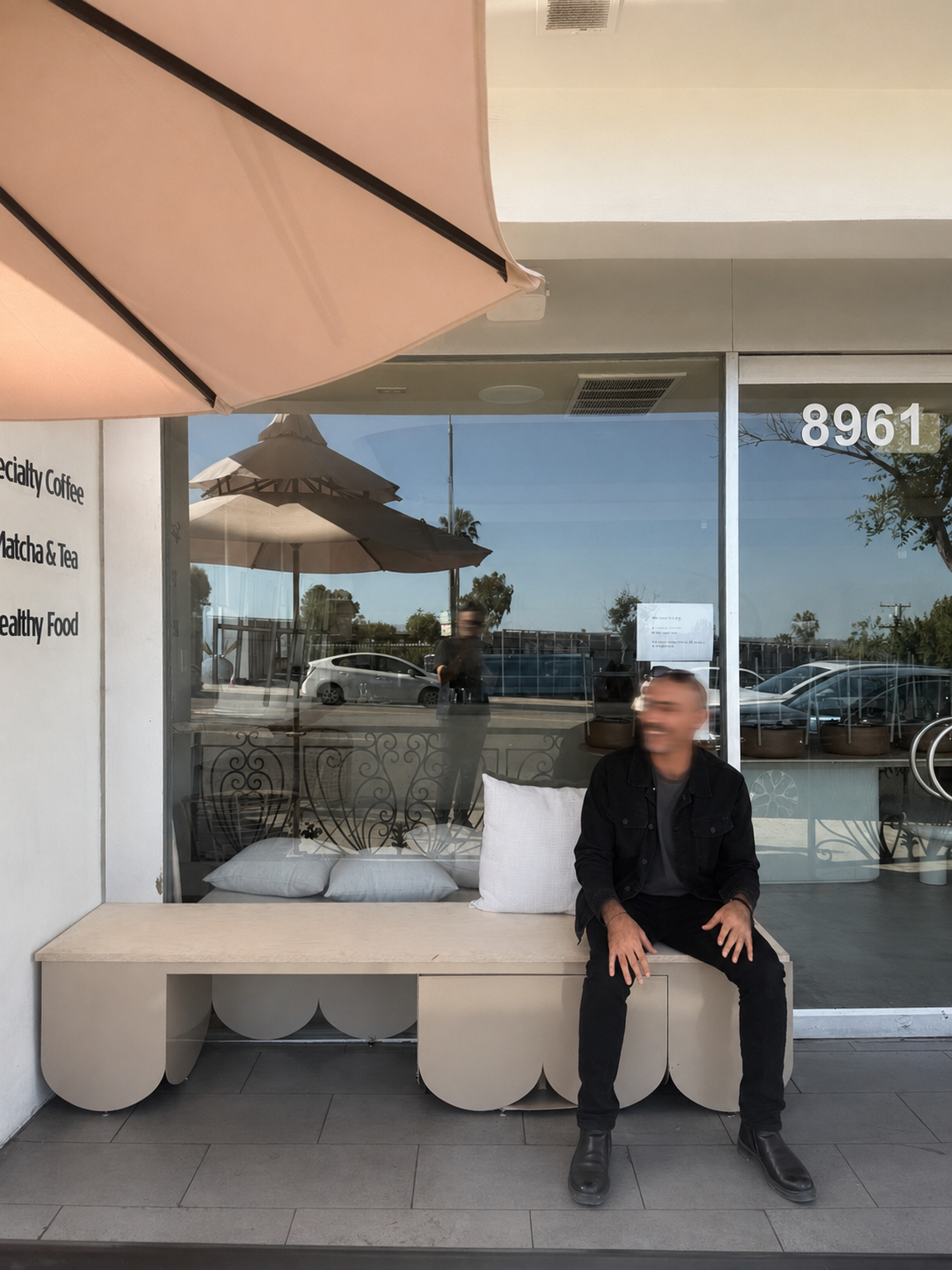
The furniture system uses simple geometric forms and ergonomic proportions to create a comfortable and recognizable identity. The U-shaped profile provides a consistent design language across different furniture elements while allowing each component to function independently or as part of a larger arrangement.
By reducing unnecessary elements and focusing on essential movements, the system creates a balance between simplicity, functionality, and adaptability.

Flexible Furniture System
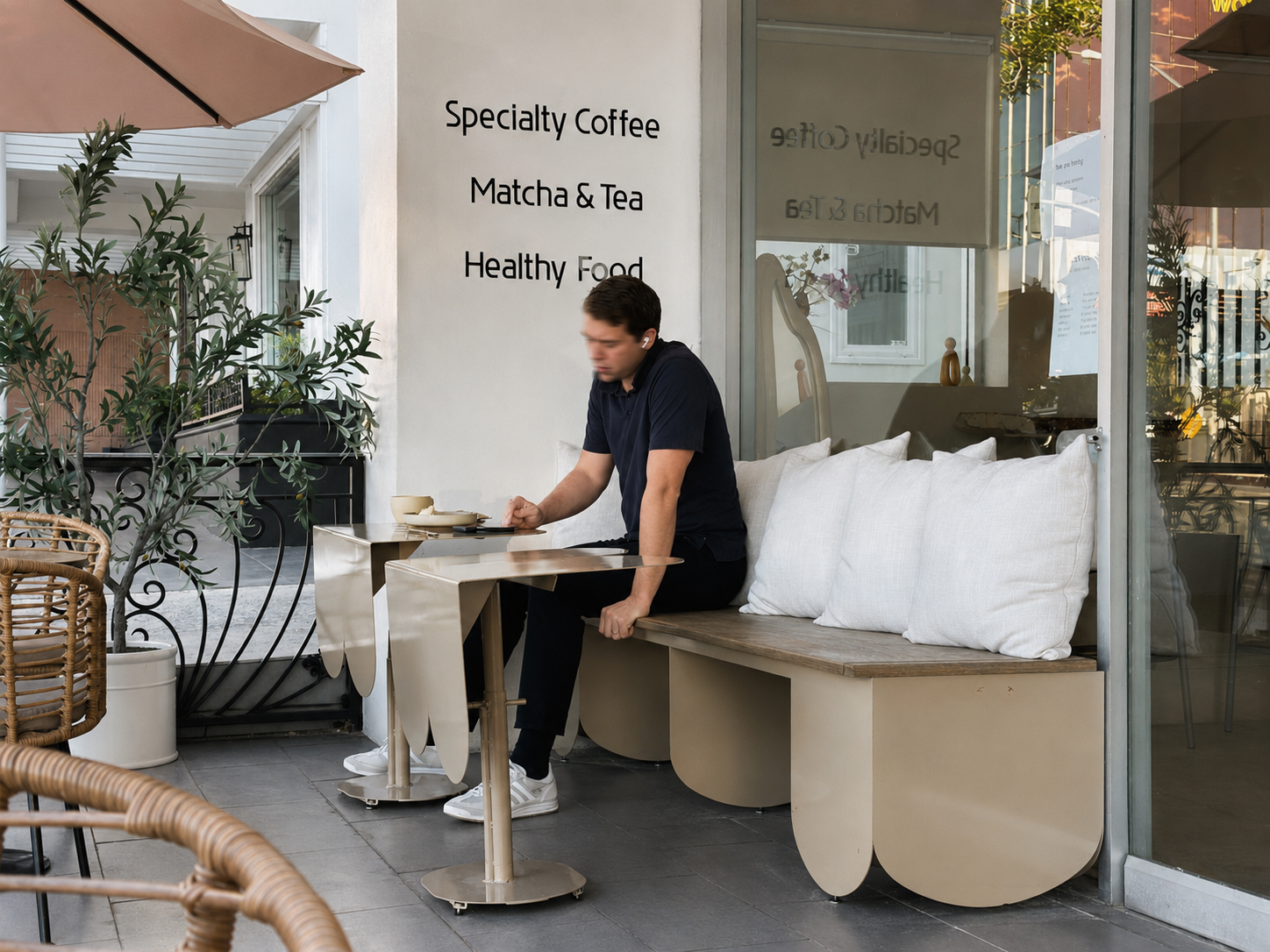
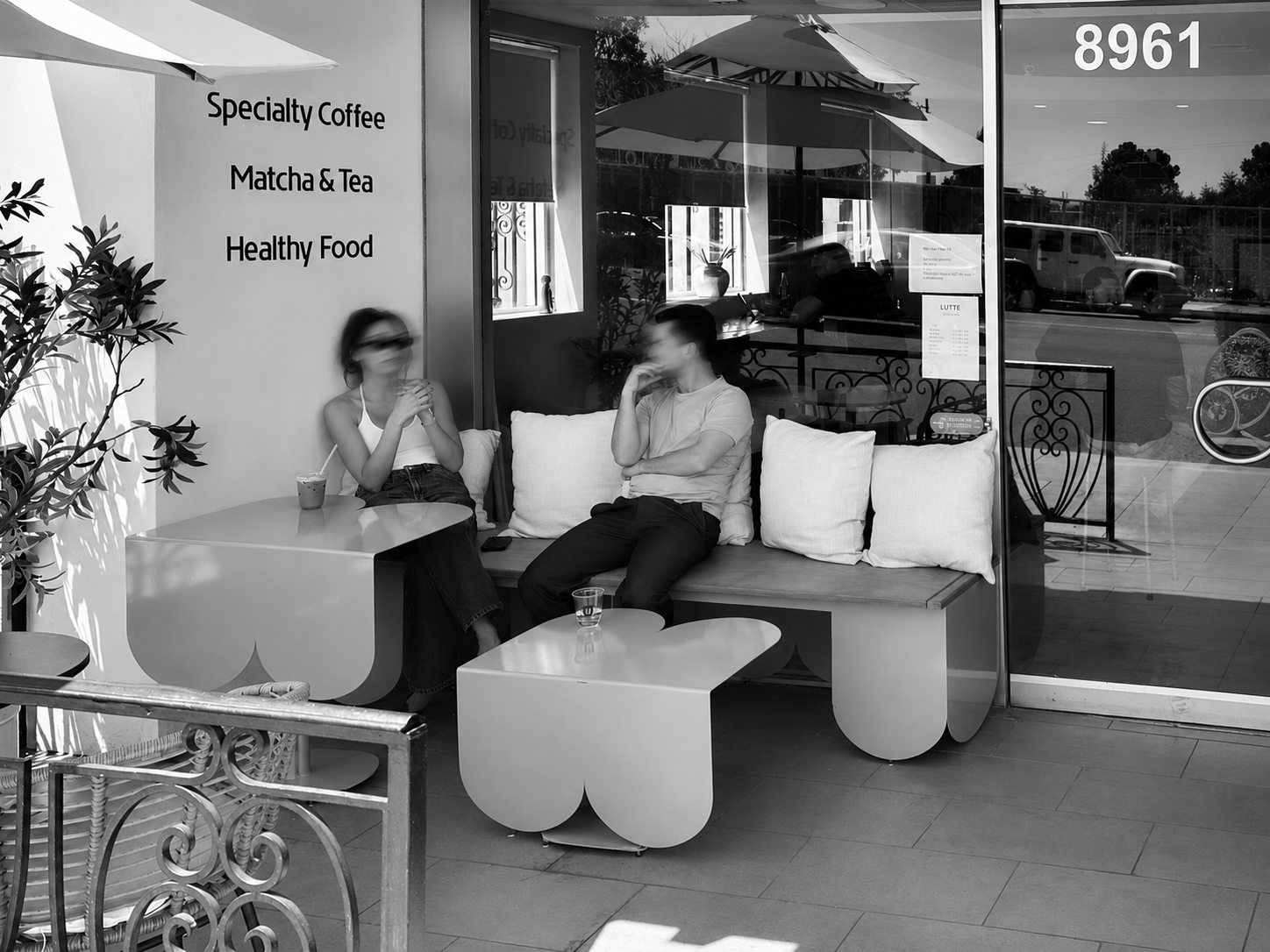
The main furniture element is a modular bench and table system designed to accommodate different seating conditions throughout the day.
Adjustable tables can move vertically and horizontally depending on user requirements, allowing the space to transform between individual seating, group dining, and compact arrangements. The furniture can support multiple configurations without requiring additional pieces or excessive space.
This flexibility allows the café to efficiently manage its outdoor area while maintaining comfort and accessibility for different users.
Flexible Furniture System in Motion
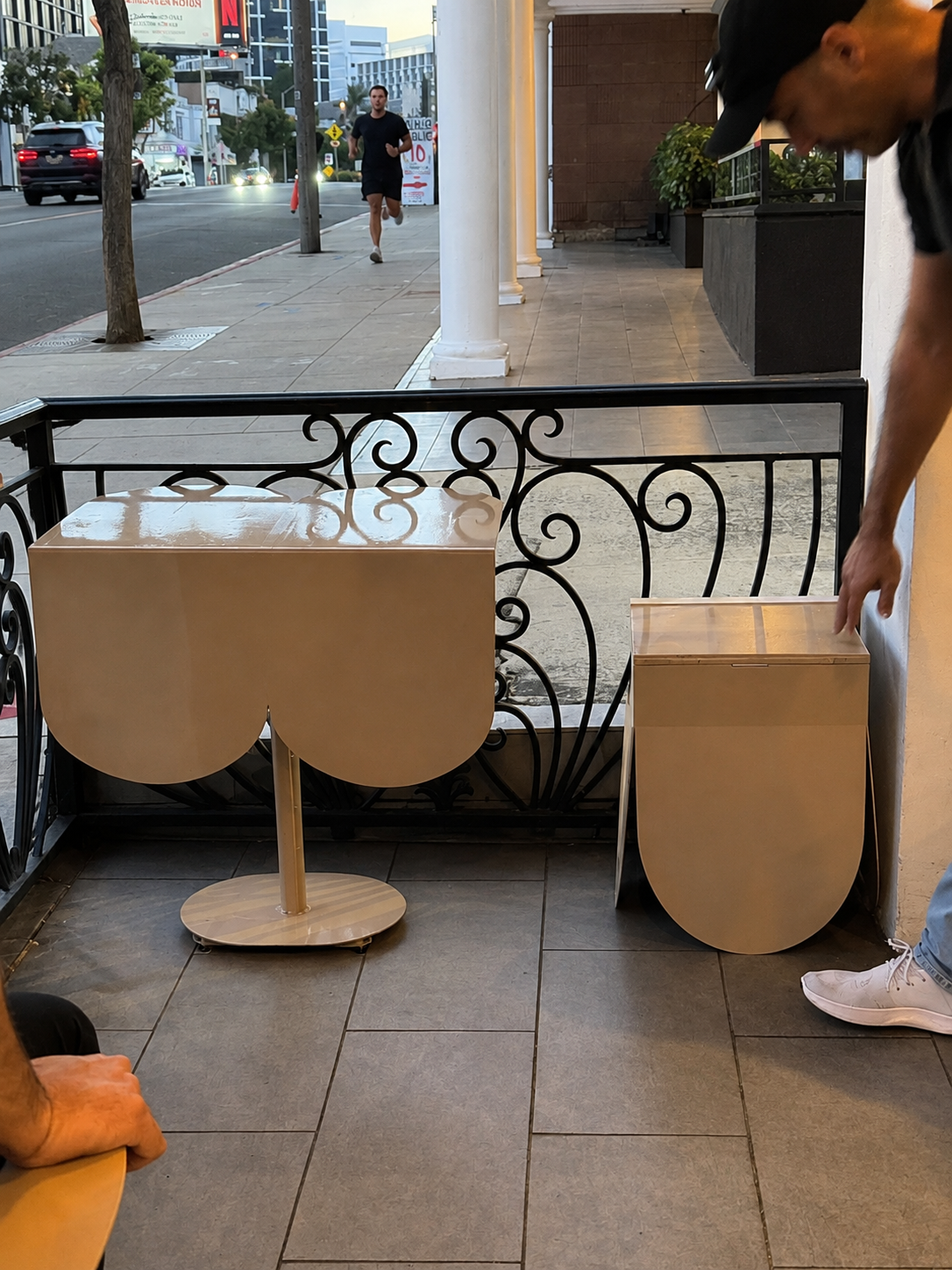
The transformable bench and table system adapts to the changing needs of the café throughout the day. Through adjustable table heights and an integrated opening and closing mechanism, the furniture transitions between active seating, flexible use, and a secured after-hours configuration.
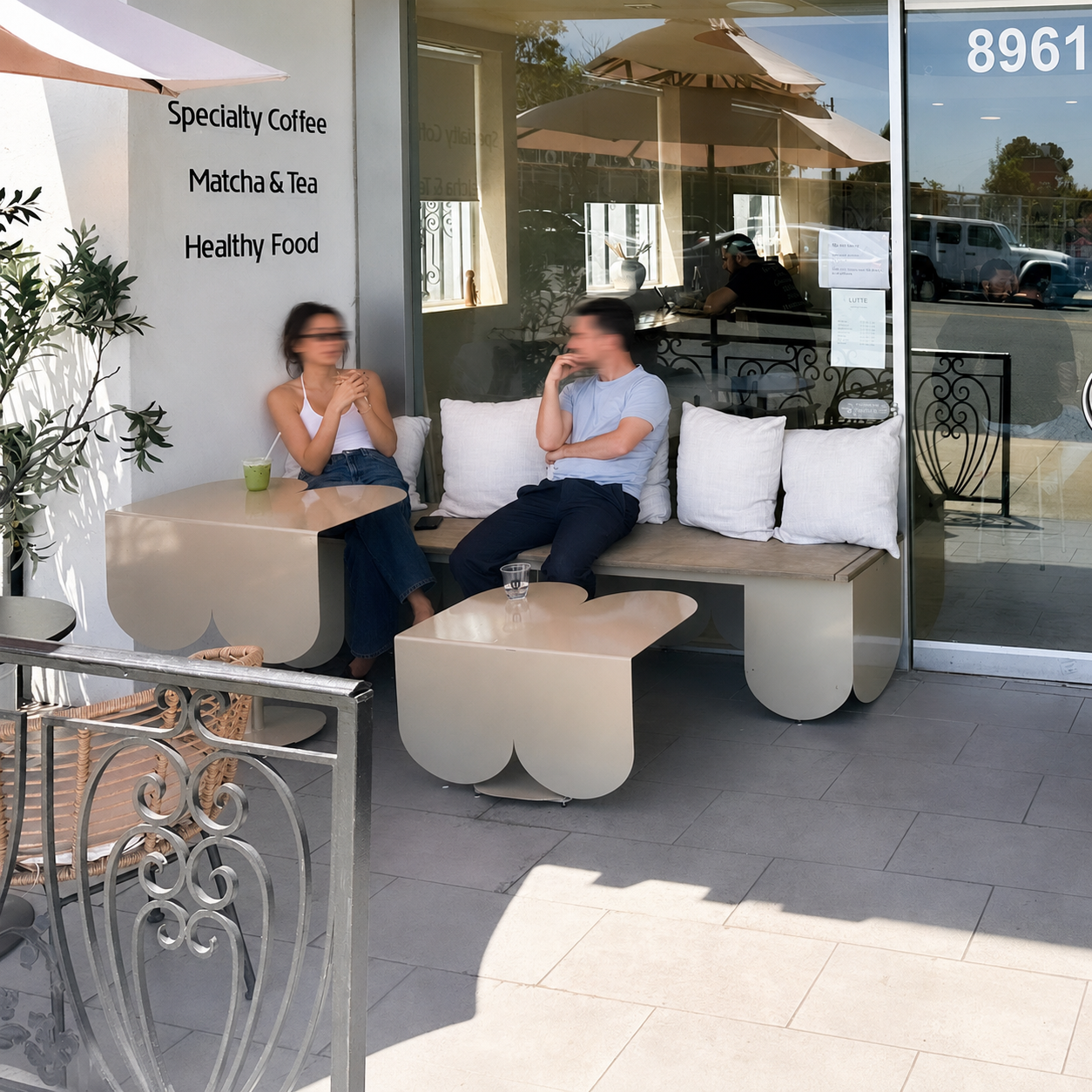
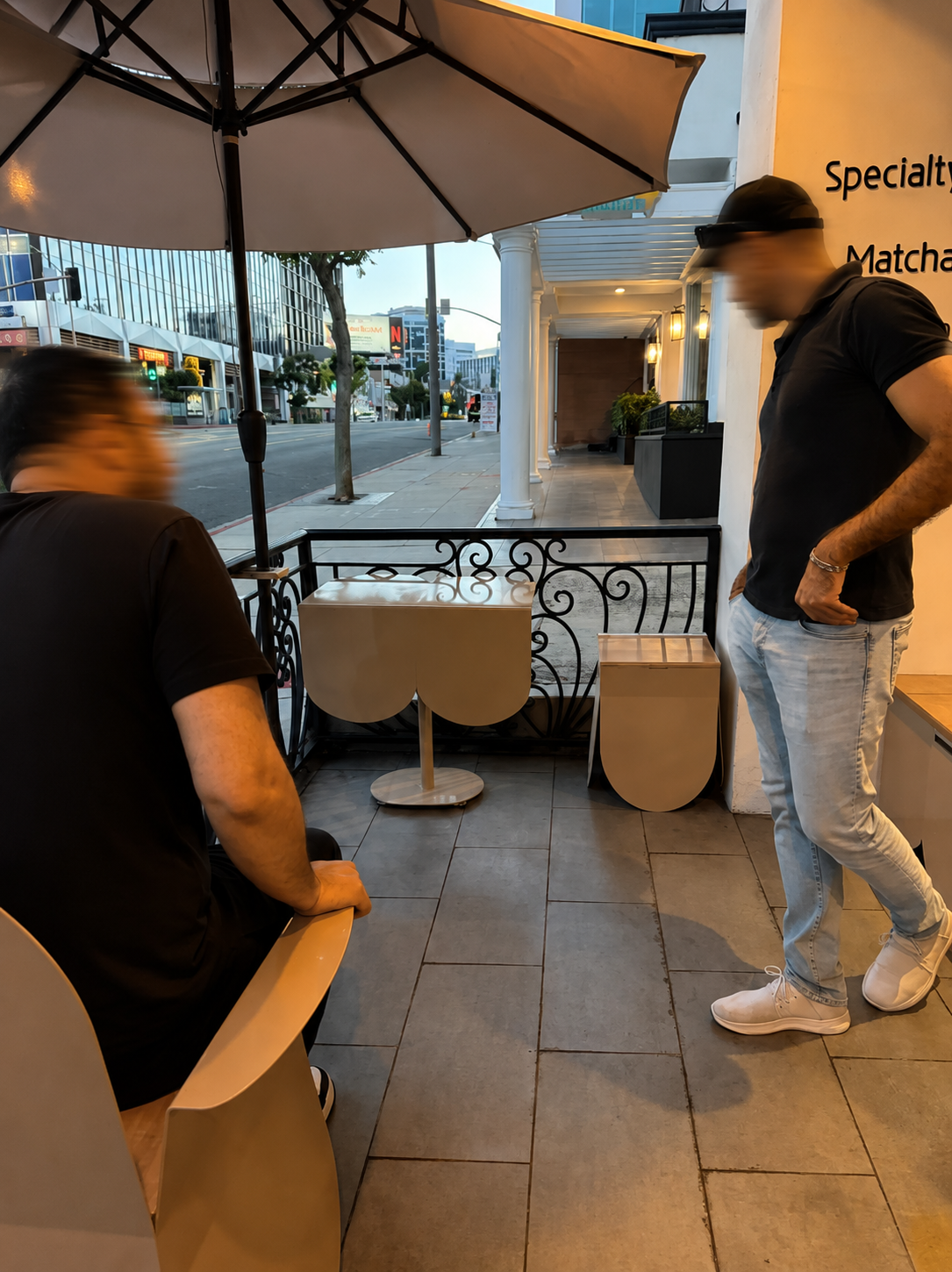
During operating hours, the tables can be adjusted to accommodate individuals, couples, and groups. The integrated system makes efficient use of the limited outdoor space while maintaining clear circulation and a unified architectural identity.
Flexible Furniture



Bench & Table Transformation
The bench and table system is designed around the relationship between daily operation and after-hours closure.
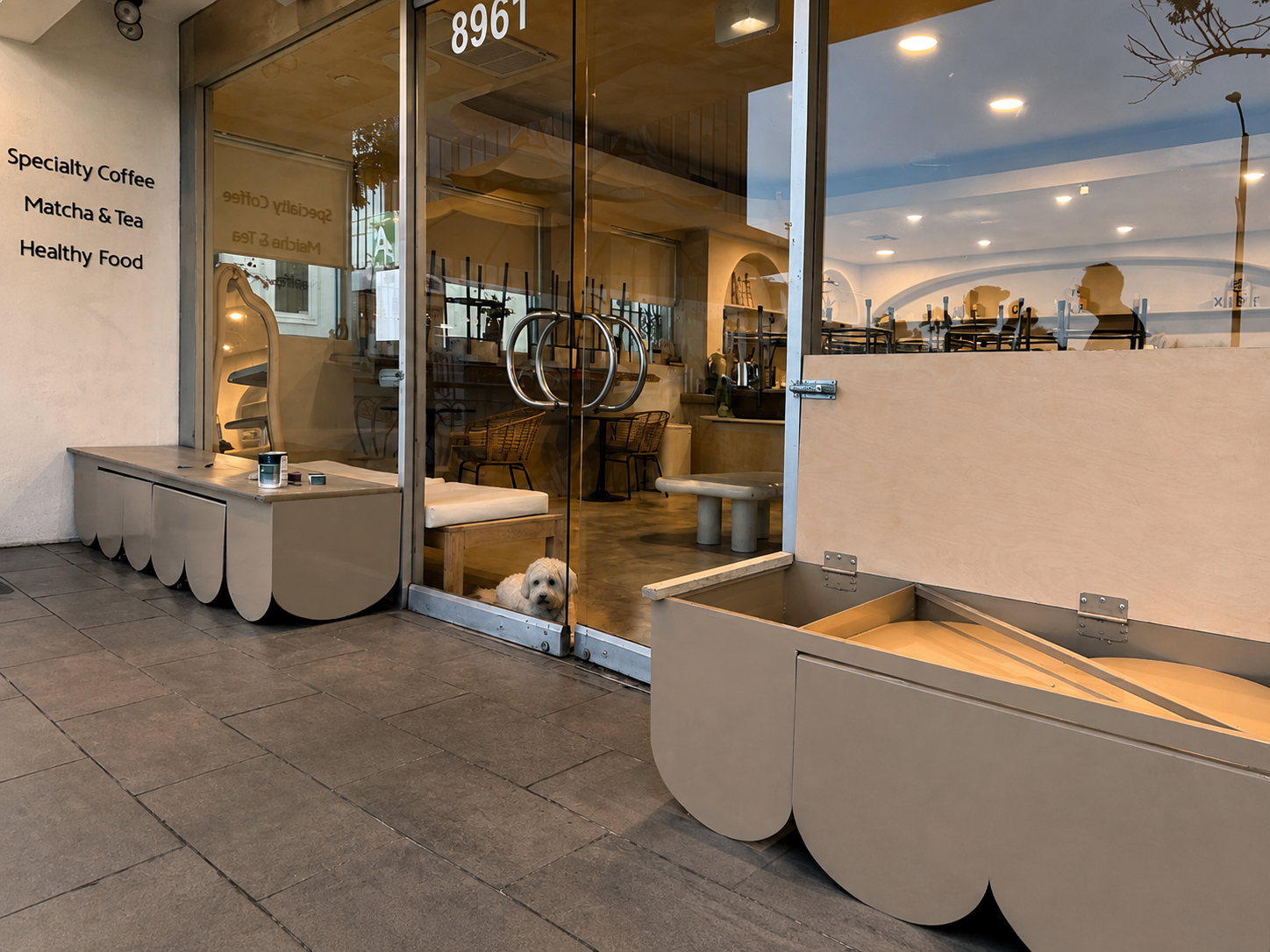
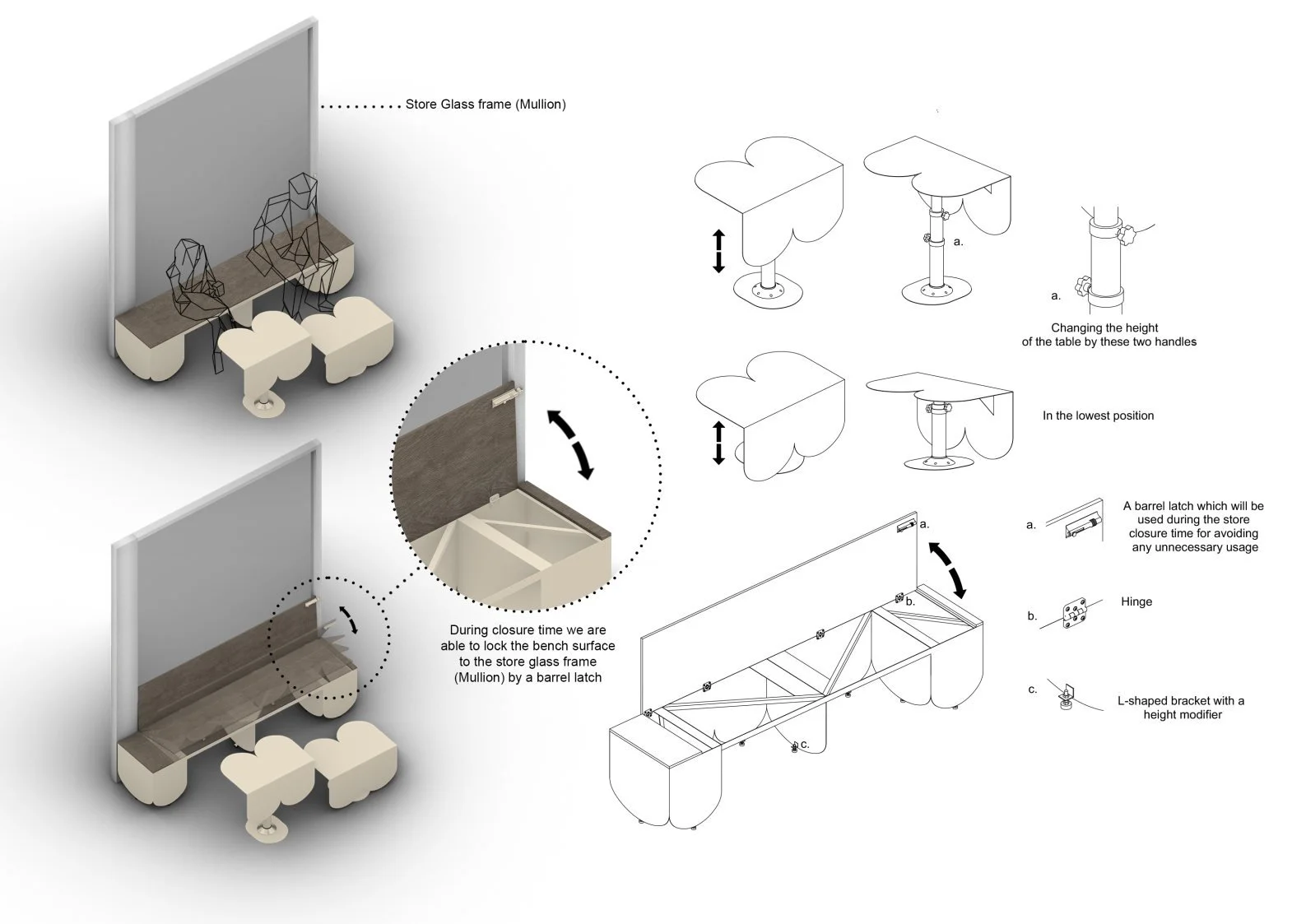
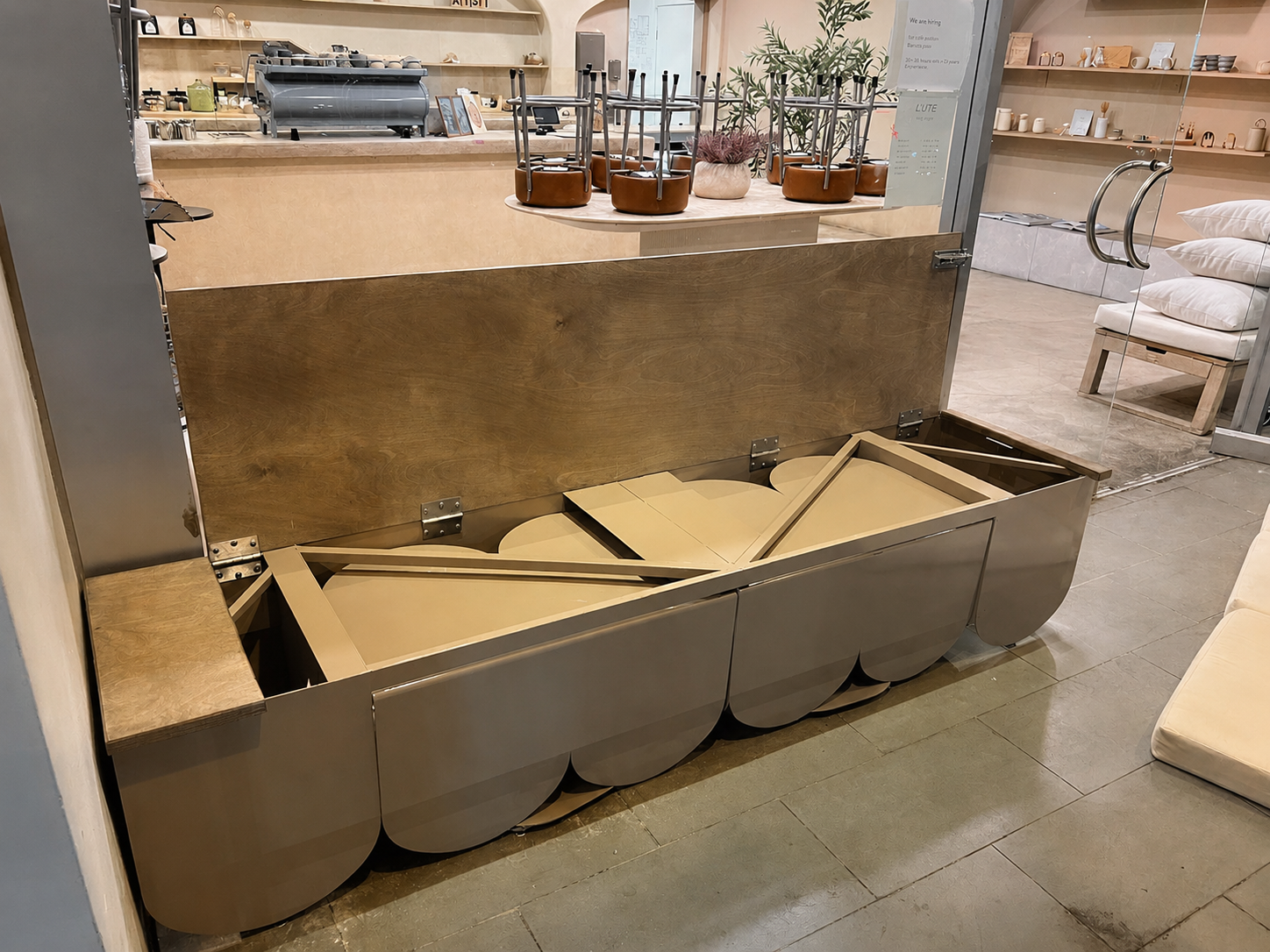
During business hours, tables extend from the bench to create functional dining surfaces. When the café closes, the tables can be lowered and stored beneath the bench structure, reducing visual clutter and eliminating the need for external storage.
The bench surface then folds outward and locks into position, preventing use after closing while keeping the entire system integrated within the furniture itself.
After-Hours Transformation
At closing time, the tables slide underneath the bench, removing the need for separate storage. The bench then bends outward, making the seating surface unusable and discouraging unauthorized occupation.
Adjustable Mechanisms
The adjustable tables incorporate a height-modification mechanism that allows users to change the table position according to different seating conditions.
Multiple height settings provide flexibility between dining, working, and casual use. The adjustable system improves ergonomics while allowing the furniture to respond to different user preferences and activities.

Chair & Stool System
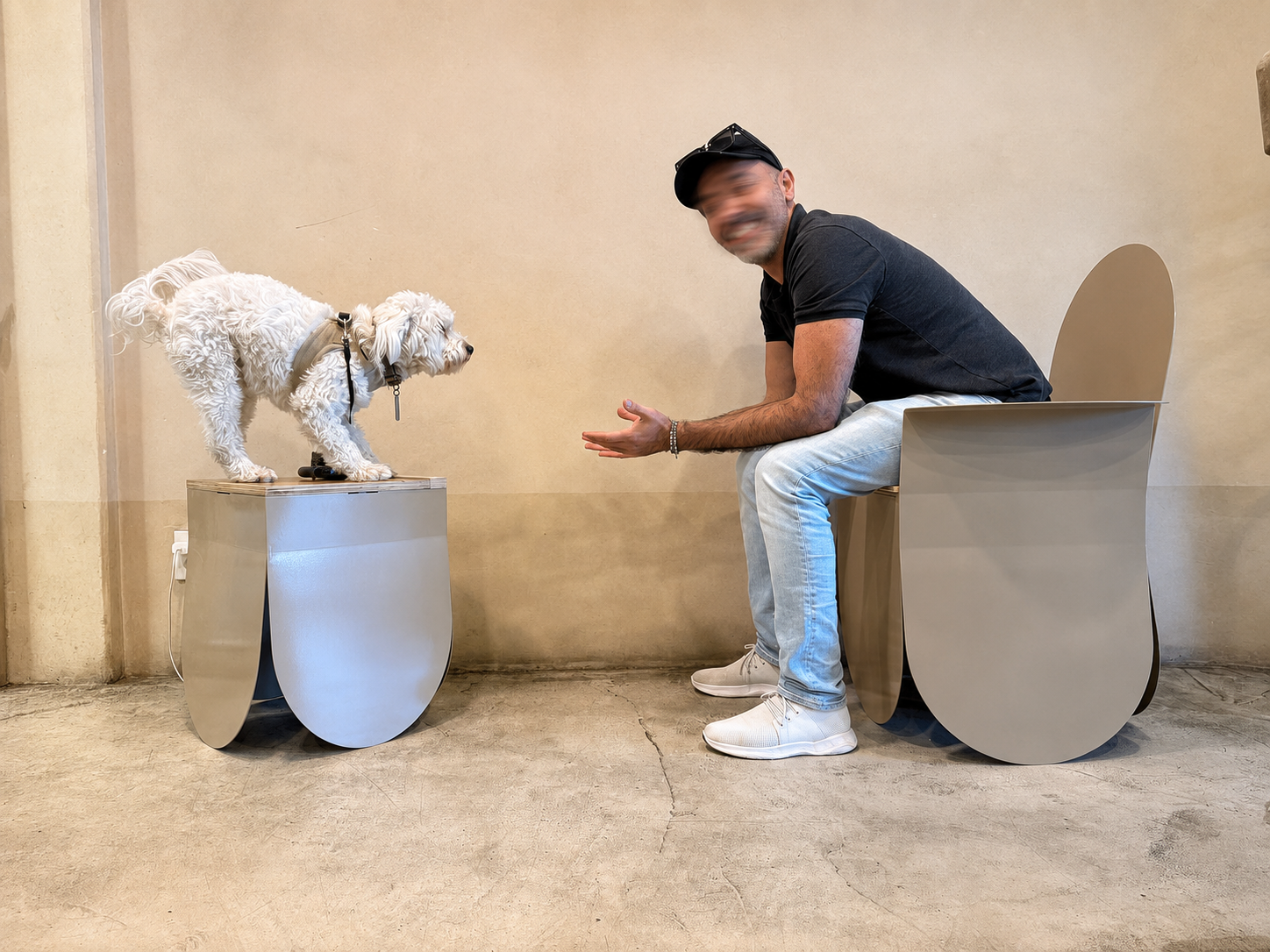
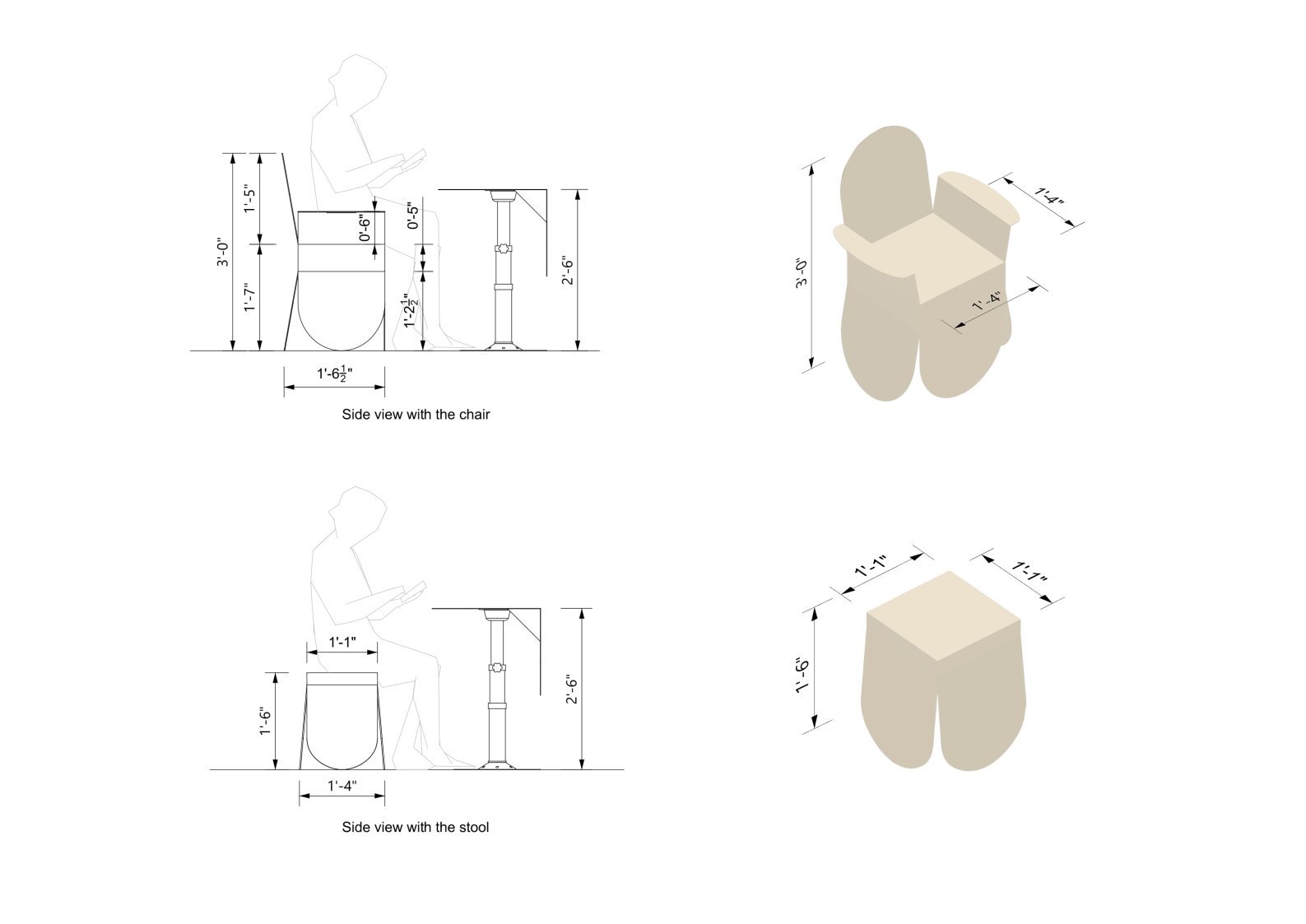
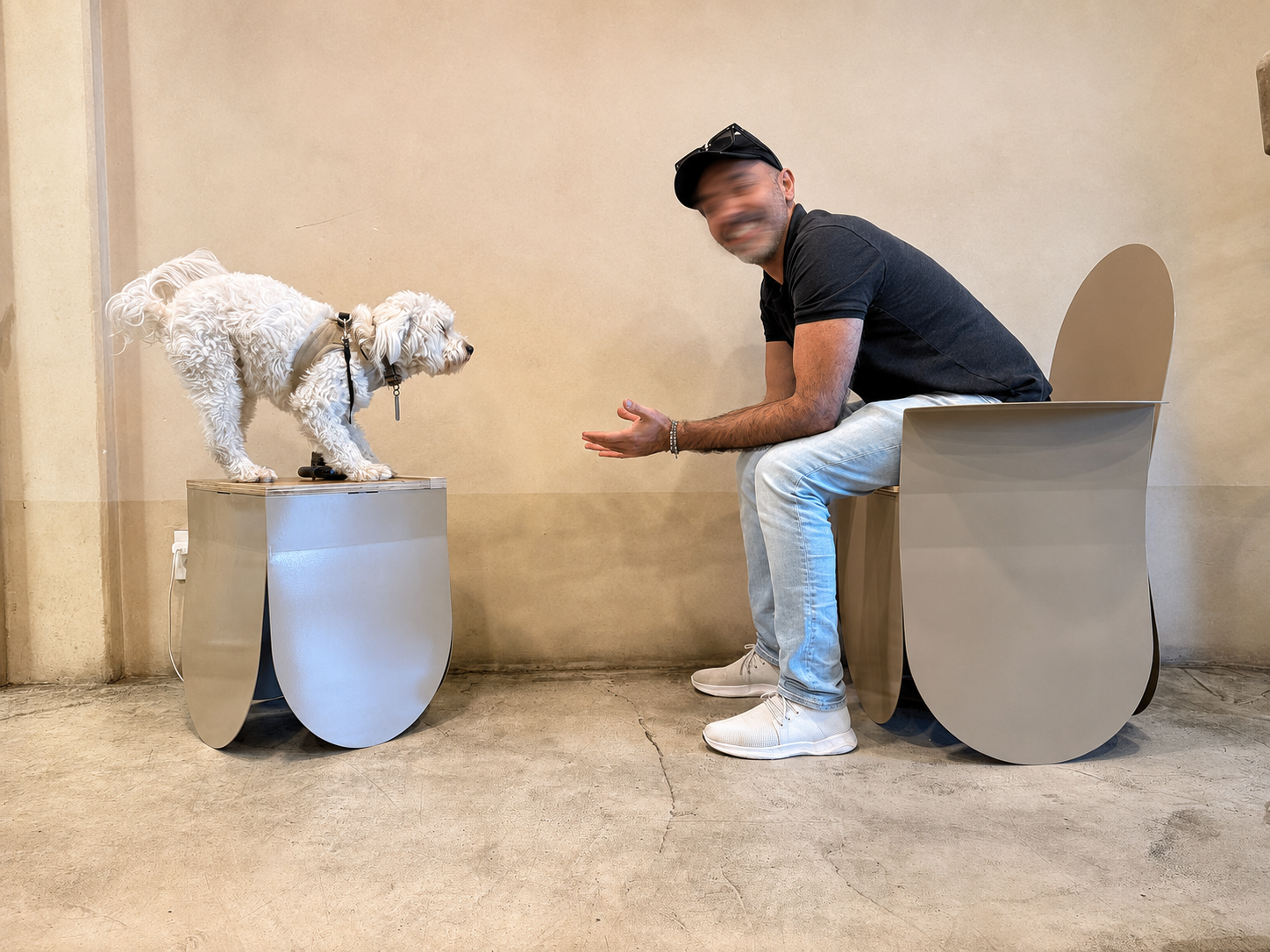
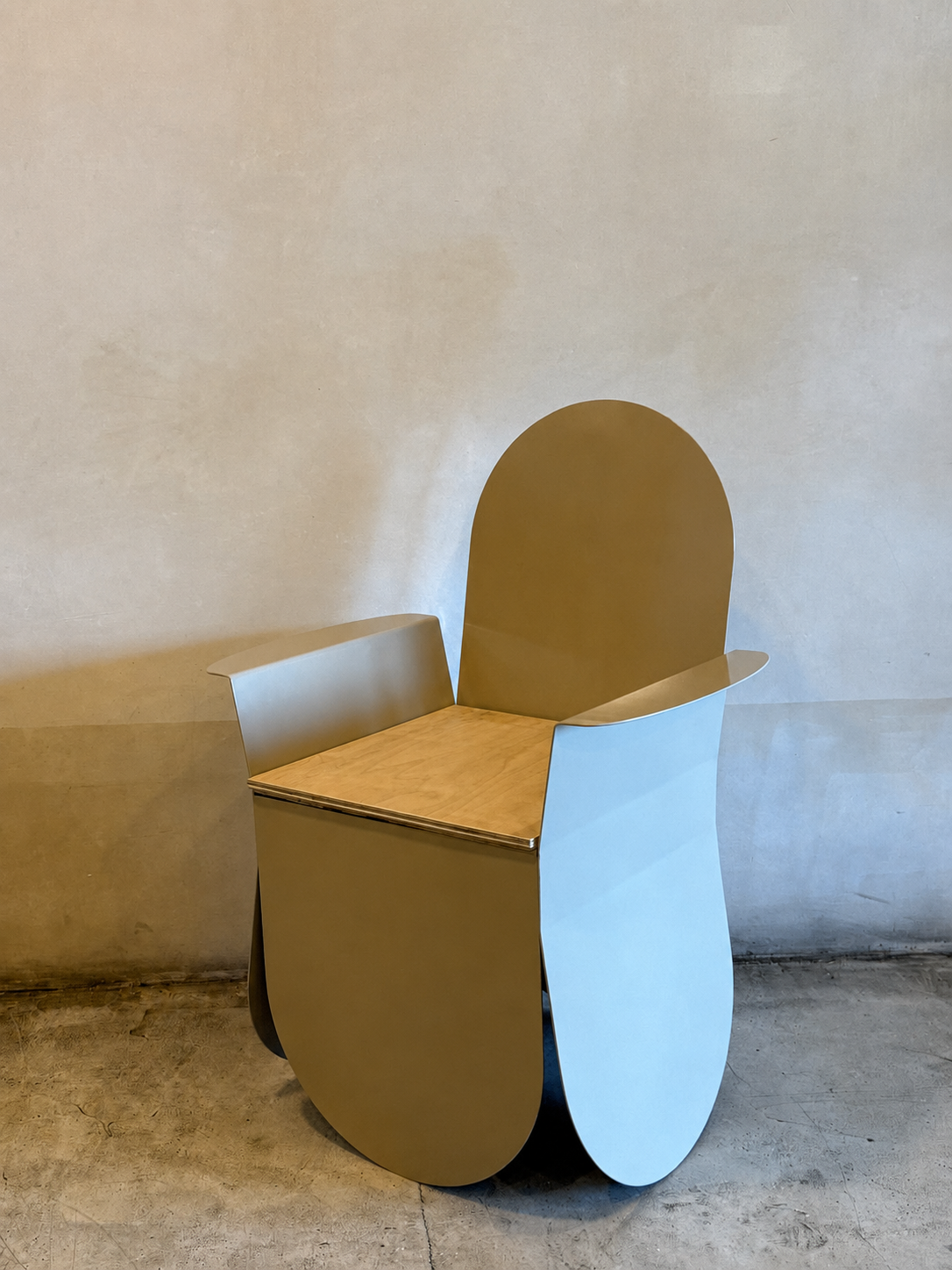
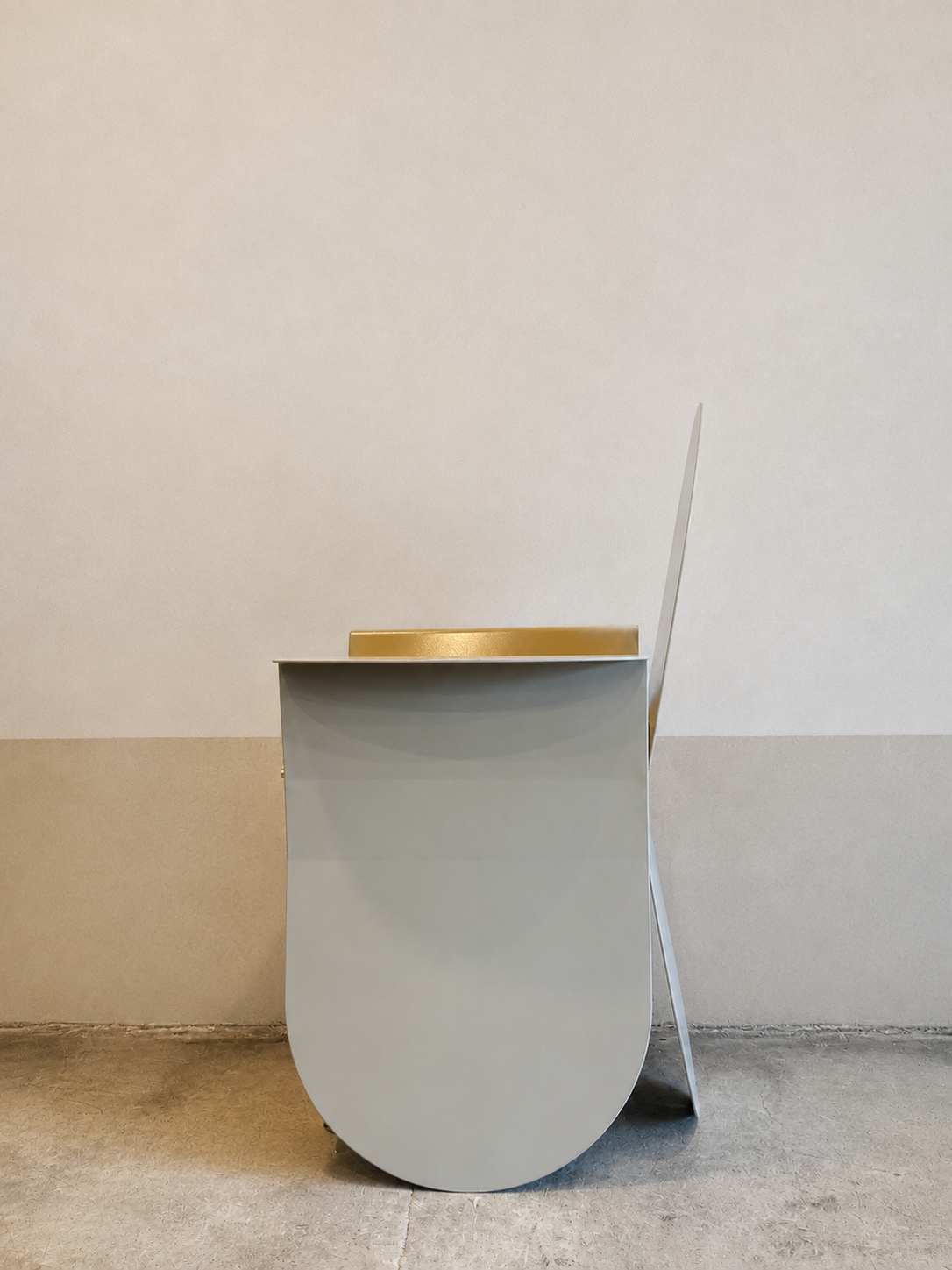
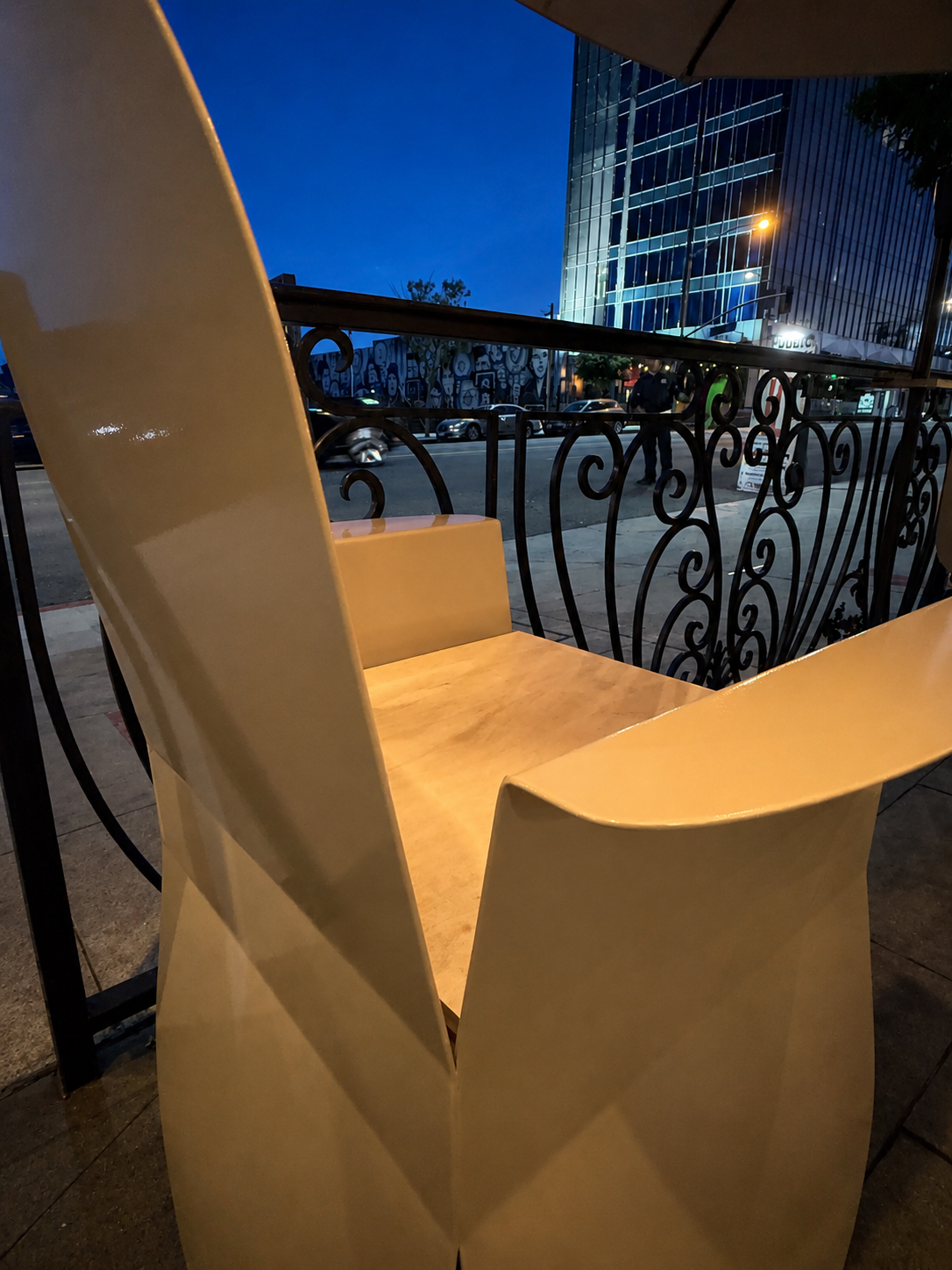
The chair and stool elements follow the same design language as the bench system, using the same U-shaped geometry and simplified material expression.
Designed as independent modular pieces, they provide additional seating options while maintaining consistency with the overall furniture family. Their compact dimensions allow them to work individually or as part of a larger seating arrangement.

Furniture as Architecture
Lutie Café reimagines outdoor café furniture as a small-scale architectural system. The project combines comfort, flexibility, fabrication, and operational efficiency into a single design approach.
Through transformable components and adaptable configurations, the furniture responds to the changing rhythm of the café—from an active public space during operating hours to a secure and controlled environment after closing.


Fabrication & Assembly
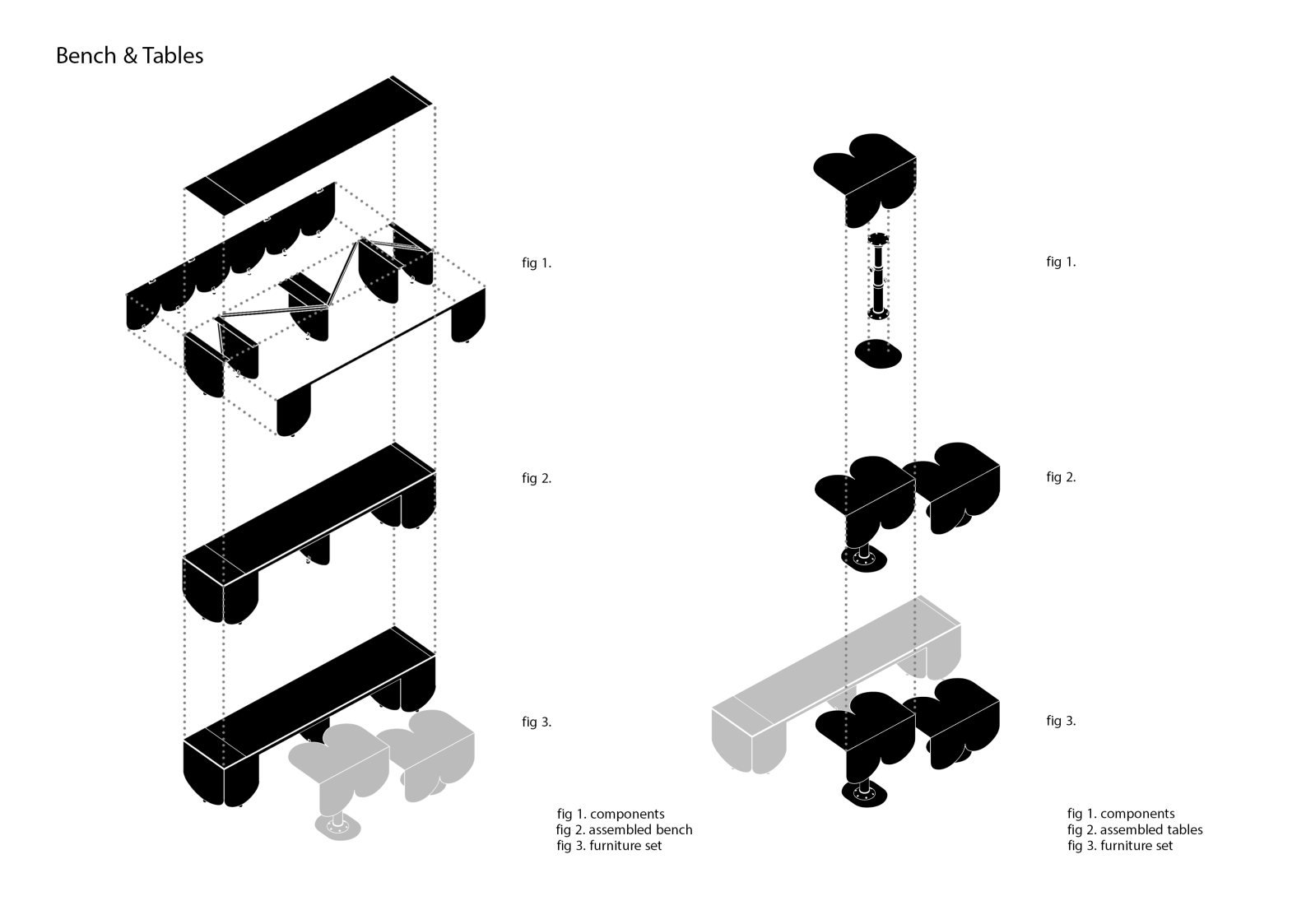
The project was developed through a detailed fabrication process, focusing on modular construction, precision detailing, and ease of assembly.
Each furniture component was designed as an individual element that can be fabricated, assembled, and maintained efficiently. The exploded diagrams illustrate the relationship between structural components, surfaces, hardware, and mechanical connections.
The fabrication approach allows the system to combine custom craftsmanship with practical production methods, ensuring durability and reliable daily operation.

RELATED PROJECTS

Coffee Table

Layered Library

Sink